Manakara & the Southeast
Gateway to the jungle train, Pangalanes Canal cruises and the adventurous Route RN12 of southeast Madagascar.
Manakara & the Southeast
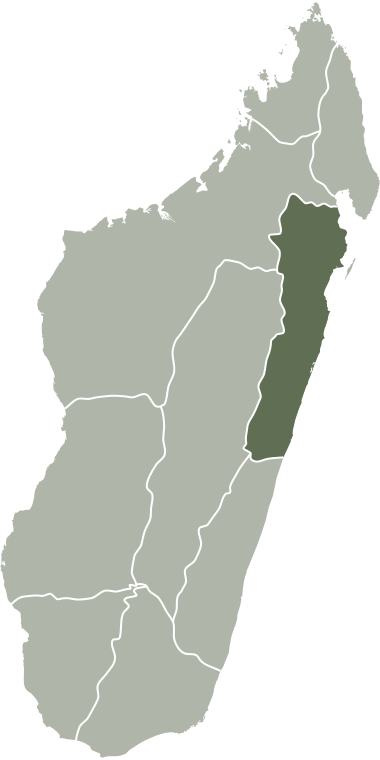
Manakara is the gateway to one of the most adventurous corners of Madagascar. The eastern port city is the final station of the jungle train that connects the Central Highlands to the coast, and the starting point for everything that comes next.
Multi-day river cruises depart from Manakara along the reed beds and vast wetlands of the Pangalanes Canal. This 650 km long network of inland waterways along the east coast was once dug to transport the region’s riches – vanilla, lychees, cinnamon, black pepper, cloves.
Last but not least: the city is the starting point of the legendary Route Nationale (RN) 12: 420 km of adventure towards Tôlanaro (Fort-Dauphin), over misty hills and through mysterious inland waters. Formerly a four-day expedition, with at every river a bac – a metal ferry on which your car is loaded. Most bac have been replaced by bridges; only four are still in use.
The result: the adventure remains, but waiting in long lines for the bac is much less of an issue. You win time to focus on all the beautiful things there are to see. In short, this region is for anyone who loves an adventurous road trip.
Highlights
Manakara Region & the South-East
Manakara
The port city of Manakara is situated at the southernmost point of the Pangalanes Canal, a sort of hub of the south-east. It is the final station of the legendary jungle train from the Central Highlands, the starting point for multi-day river cruises on the Pangalanes Canal, and the start of the adventurous RN12 towards Tôlanaro. Three great travel experiences, one city.
Vohipeno
On the way to Vohipeno, you drive over rolling hills wrapped in a mysterious mist, with the Indian Ocean in the distance. Arab traders landed early in this city. They brought not only trade goods with them, but also Islam. And with it: literacy. To read the Quran, people had to learn how to read and write. Madrassas (Islamic schools) were established, and people also learned to make paper from tree bark.
You can still find the Islamic schools here today. Yes, the Arab heritage is clearly visible and felt in Vohipeno, a remarkable contrast in a predominantly Christian country.
Farafangana and Manombo Special Reserve
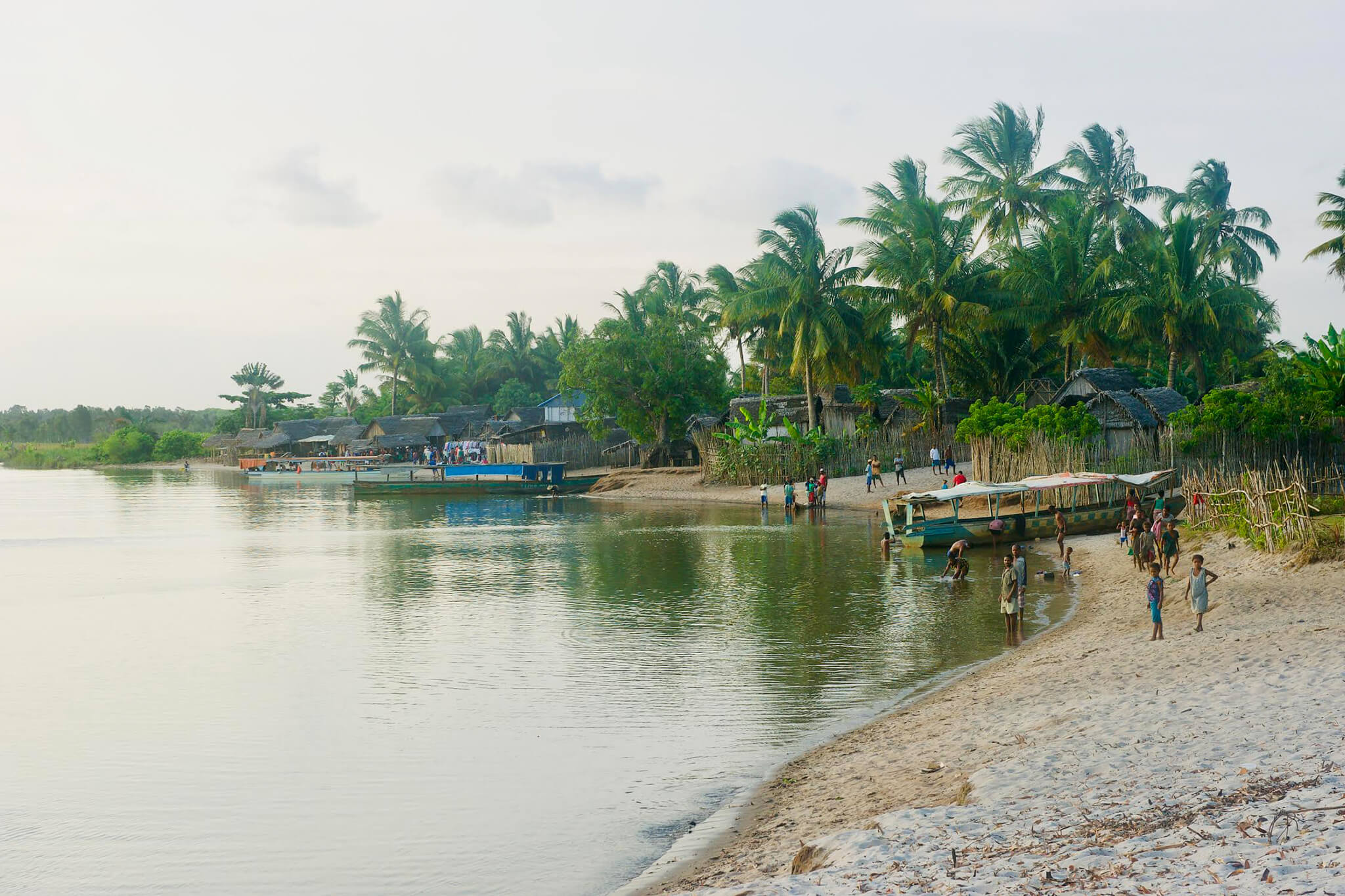
Farafangana is a welcome stopover a bit further south. A lively fishing village with a beautiful beach on the Indian Ocean. The perfect place to unwind, eat fresh seafood, and feel the local rhythm. Nothing more, nothing less. Just right.
Between Farafangana and Vangaindrano, Manombo Special Reserve comes highly recommended. A protected reserve with a striking richness of species: the highest diversity of snail species in all of Madagascar, seven different species of lemurs, tenrecs (the Malagasy version of the hedgehog), ring-tailed mongooses, fossas, and numerous bird species, including the squacco heron and night heron.
Vangaindrano
Vangaindrano is a real frontier town, the place where the paved road ends and the adventure begins. People gather here to trade: a colourful town with many small hotels and a unique energy.
This is where you refuel, both literally and figuratively. An extra jerrycan of diesel, spare change, plenty of water, canned food. After that, the bush of the RN12 begins, with dirt tracks, bac, and bridges.
Sandravinany
This charming little fishing village is hidden along a lagoon. A beautiful place to spend the night, with basic hotels, often lovingly decorated wooden cabins. In the kitchen, a local mama works her magic behind the stove, serving up delicious seafood platters.
Saint-Luce and Lokaro Bay
Saint-Luce is a cape where the ocean is at its most beautiful. Definitely worth a visit, for the final stage to Tôlanaro. Beautiful beaches, and the Saint-Luce Reserve. This reserve preserves one of the island’s last pristine coastal rainforests. A small piece of nature with an impressive richness of species.
A little further south you arrive at Camp Pirates in Lokaro Bay, a remote ecolodge where you can truly get away from it all. You can enjoy wonderful walks in this spectacular bay.
Nahampoana Nature Reserve
A stone’s throw from Tôlanaro lies this small but surprisingly rich private reserve. Originally set up as a botanical trial garden, today it is one of the greenest spots in the south-east. Surrounded by small waterfalls, natural pools, and lush vegetation live five species of lemurs that you can observe up close: from the ring-tailed lemur and the sifaka to the bamboo lemur. An ideal stopover just before your arrival in Tôlanaro.
Tôlanaro (Fort-Dauphin)
Tôlanaro is the end point of the RN12. The French were the first to land here, which explains the name Fort-Dauphin (dauphin = crown prince). For a long time, it remained a modest fishing village, until one of the largest mining companies in the world acquired a concession here. In no time, Tôlanaro grew into a bustling city with its own port, employment, and a distinct corporate culture. But also: beautiful bays, oysters, surfing, hiking, and mountain biking on Pic Saint-Louis, where mountains and sea meet.
Madagascar.
Welcome
to our home.